
The work
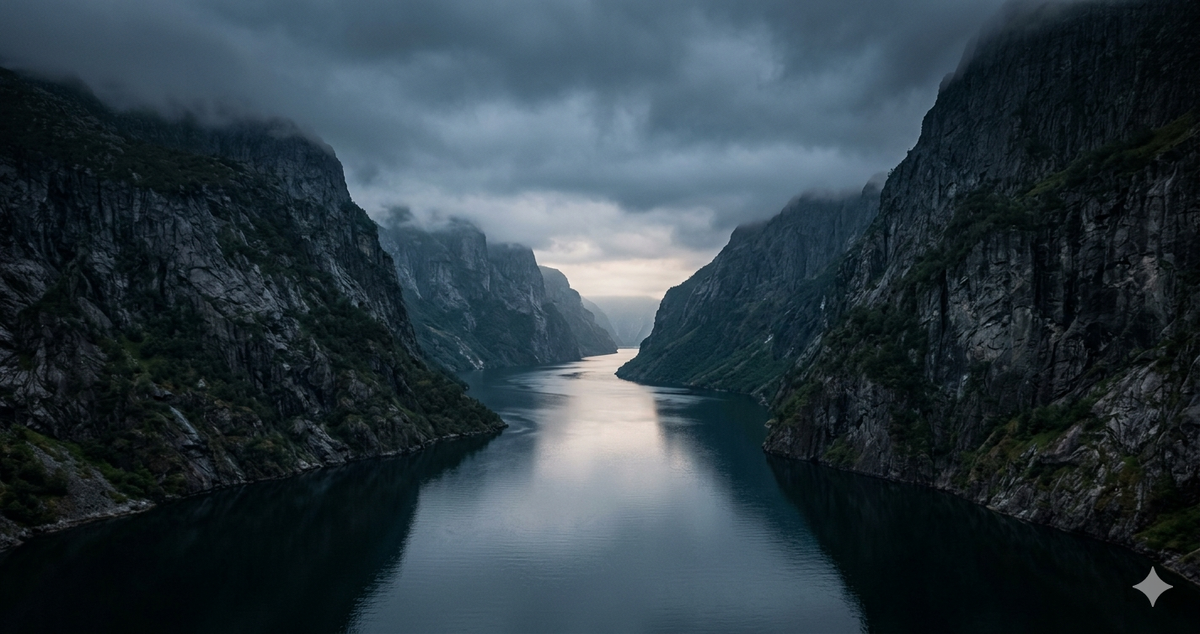
Most "the work" pages are a list of past projects. This one is not. It is closer to a map of the territory I keep returning to — what I look at, what I avoid, and why.
Most organisations I work with are running two systems in parallel. There is the one they are visibly building: products, services, interfaces, platforms. And there is a second one that decides whether any of the first will mean anything. The second is harder to name. It is the cadence at which decisions get made, the governance that quietly forecloses options before they ever reach the table, the defaults nobody chose on purpose, the conventions that survive every reorganisation because nobody noticed they were there.
The second system tends to stay invisible until something breaks against it. It is policy, culture, financing, hierarchy, the rhythm of meetings, the language people are permitted to use. It is what determines whether the visible work survives contact with the institution around it.
Only one of the two is ever properly designed. The other accretes — out of years of small decisions taken on the way to other things, decisions that hardened into defaults before anyone thought to question them. The two meet for the first time at the moment a project fails to deliver what it was meant to, by which point it is rather too late to redesign either of them.
The work I am interested in lives between them.
In practice, it surfaces as a particular kind of question. What is your team actually being asked to oversee, and what cognitive shape does that have? Where in the loop are the decisions really being made, and where is the human position only on paper? What conventions does this product depend on, and which of them are about to break? What is the cadence of attention this design assumes — and is anyone in your organisation actually able to give it?
I do not have frameworks for these questions. I have ways of looking, and I am happy to share them slowly, in the right kind of conversation.
That conversation is where the work begins, and usually it is not one but several. The first piece is to map together what is actually alive in the organisation: what makes it the organisation it is, what holds it together, what quietly holds it back. From there, the work takes whatever form the situation calls for — an artefact in writing or in image, a prototype, a product, a quiet change inside the institution, sometimes a movement that was not there before. What we make follows the situation, not the practitioner.
Working together tends to take one of two shapes.
The first I think of as a first reading. Two to four weeks, fixed in scope and in price, given over to a single situation that has become acute enough to need close attention — an AI rollout that has stopped doing what it was meant to, say, or a governance structure that has come adrift from the products it is supposed to cover, or a product organisation that has outgrown the operating model it inherited. What you receive is a reading of what is actually happening, where the leverage sits, and what a useful next move would look like.
The second is standing work. A continuing arrangement, usually monthly, in which a small leadership team gets a second pair of eyes on the structural decisions as they surface — before they have hardened into something difficult to undo. The kind of relationship that earns its keep over a year, not a quarter. I take on very few of these at any one time, for fairly obvious reasons.
Both begin in the same way: a conversation. No deck, no proposal-in-waiting. If what we talk about turns out to deserve carrying forward, we work out the shape of doing that together. If it does not, you will have spent an hour I hope was worth your time anyway.
If something here resonates — if you are a CTO, a CPO, or a manager navigating one of these gaps — that conversation is open.